Covered and Confident: How the Jilbaab Is Quietly Dismantling America's Beauty Myths
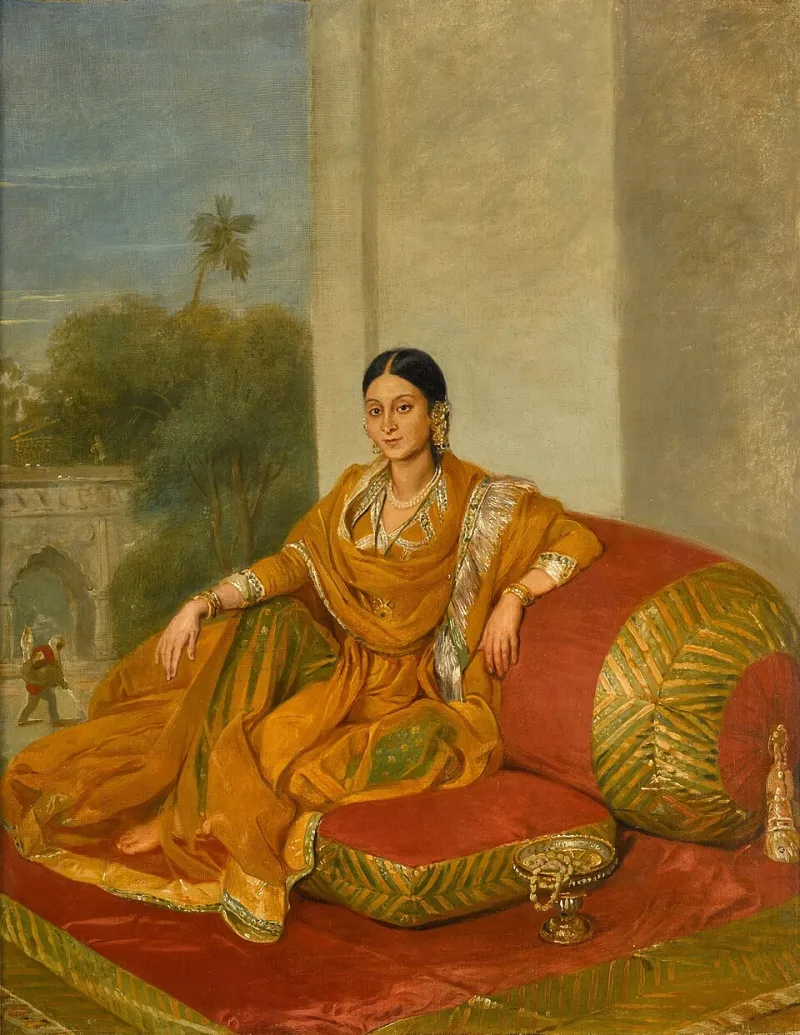
Photo: Arthur William Devis, Public domain, via Wikimedia Commons
For decades, the dominant narrative around American beauty has operated on a fairly narrow set of terms. Exposed skin equates to confidence. Visible curves signal empowerment. The less a woman conceals, the more freely she is presumed to move through the world. These assumptions have been reinforced by advertising campaigns, Hollywood productions, and the relentless scroll of social media feeds that reward a very particular kind of visibility.
But something is shifting. Quietly, persistently, and with growing cultural momentum, modest fashion — and the jilbaab in particular — is inserting a different question into that conversation: What if covering yourself is not a limitation, but a choice that expands rather than contracts your sense of self?
The Scrutiny Tax
Dr. Renee Engeln, a psychology professor and researcher who has written extensively on what she terms "beauty sickness," describes a phenomenon familiar to many American women: the chronic, low-grade exhaustion of existing in a culture that treats the female body as a public object to be evaluated. From the moment a woman steps outside her home, she may find herself mentally cataloguing how she appears — whether her outfit is appropriate, whether her body meets an unspoken standard, whether she is drawing the right kind of attention or the wrong kind.
This cognitive load has real consequences. Research consistently links appearance-based self-monitoring to higher rates of anxiety, diminished concentration, and reduced professional performance. The mental energy spent managing how one looks, in other words, is energy not spent on everything else.
For many Muslim women who wear the jilbaab, the experience of stepping outside that dynamic is not abstract — it is visceral and immediate. "I stopped being the thing people looked at and started being the person doing the looking," explains one Chicago-based educator who began wearing modest dress in her mid-twenties. "That sounds simple, but it changed everything about how I moved through public spaces."
When Coverage Becomes a Statement
The cultural conversation around body autonomy in America has grown considerably more nuanced over the past decade. The body positivity movement, the push for size-inclusive fashion, and growing awareness around diet culture have all contributed to a broader reckoning with how narrowly American media has historically defined attractiveness. Into that conversation steps the jilbaab — not as a reaction to Western fashion, but as its own distinct aesthetic and philosophical tradition.
What makes this moment particularly interesting is the way modest fashion is being embraced not just by women fulfilling a religious obligation, but by a wider audience questioning whether conventional beauty standards serve them at all. The jilbaab, with its flowing silhouette and deliberate emphasis on fabric, color, and drape rather than the contours of the body beneath, offers a genuinely different visual language.
Fashion psychologist Dawnn Karen, author of Dress Your Best Life, has spoken about how clothing communicates identity and shapes mood — what she calls "enclothed cognition." Within that framework, choosing a jilbaab is not the absence of a style statement; it is a highly intentional one. It says, in effect: my value is not determined by the visibility of my physical form.
The Skin Deep Paradox
Dermatologists working with Muslim women who wear full modest dress have noted something that runs counter to popular assumption: many of their patients report a marked reduction in skin-related anxiety. The logic is straightforward — when the majority of one's skin is not on public display, the cultural pressure to maintain a flawless complexion, to conceal stretch marks, or to present a body that meets an idealized standard, simply relaxes.
"There is a genuine psychological benefit to not having every inch of yourself available for public comment," notes one New York-based dermatologist who works with a diverse patient population. "Several of my patients have told me that wearing modest dress helped them stop seeing their bodies as something to be fixed."
This is not to suggest that Muslim women who wear the jilbaab are immune to beauty pressures — those pressures exist within every community, in varying forms. But the specific anxiety generated by a culture that places enormous premium on the visible female body does appear to soften when the terms of that visibility are controlled by the woman herself.
Reframing Self-Expression
One of the most persistent misconceptions about modest fashion in American media is that it forecloses self-expression. The opposite, many jilbaab wearers argue, is closer to the truth. When the body itself is removed from the equation, the remaining elements of a look — fabric texture, color palette, the way a garment moves, the accessories chosen, the overall silhouette — carry greater expressive weight.
This is a fundamentally different but no less sophisticated approach to dressing. The women who have built entire aesthetic identities around modest wear understand something that the mainstream fashion industry is only beginning to acknowledge: that constraint, rather than stifling creativity, can sharpen it.
American Muslim fashion influencers have demonstrated this principle at scale over the past several years, cultivating audiences of hundreds of thousands by showcasing how jilbaabs can be styled for everything from professional environments to outdoor adventures to formal occasions. Their content does not present modest dress as a compromise — it presents it as a starting point for a richer, more considered relationship with clothing.
A Broader Cultural Reckoning
The rise of modest fashion in the United States arrives at a moment when American culture is, broadly speaking, more willing than it has been in recent memory to question the assumptions underlying its beauty standards. Conversations about the male gaze, about who benefits from conventional attractiveness norms, and about the commercial interests that sustain those norms have become more mainstream.
The jilbaab does not claim to resolve those conversations. It does, however, embody an answer that millions of women have already arrived at independently: that one's appearance does not need to be legible to the general public in order to be meaningful to oneself.
That is not a retreat from beauty. It is a redefinition of it — one that places the terms of self-presentation firmly in the hands of the woman wearing the garment, rather than in the expectations of those observing her.
At Jilbaab Store, we believe that modest fashion is not merely a category of clothing. It is a point of view — one that carries within it a quiet but unmistakable argument about what it means to dress with intention, dignity, and authentic confidence in contemporary America.