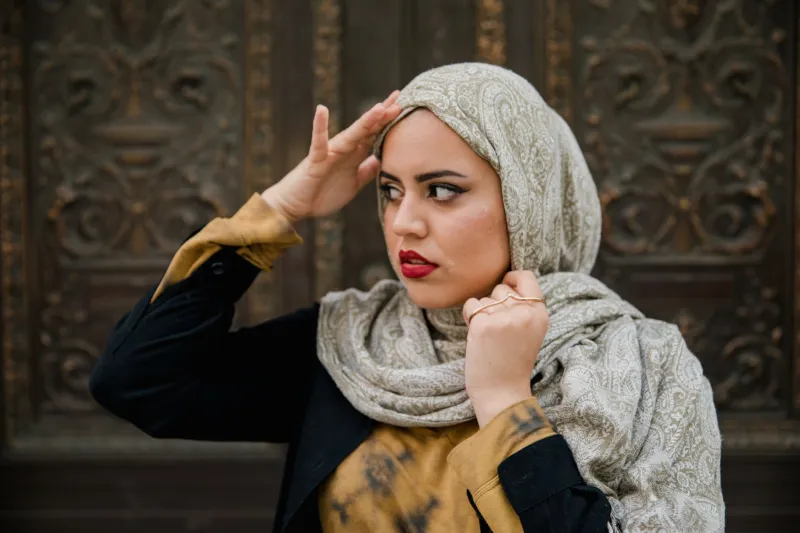
Dressed to Perform: How the Jilbaab Is Becoming a Quiet Power Tool for Women in High-Stakes Careers
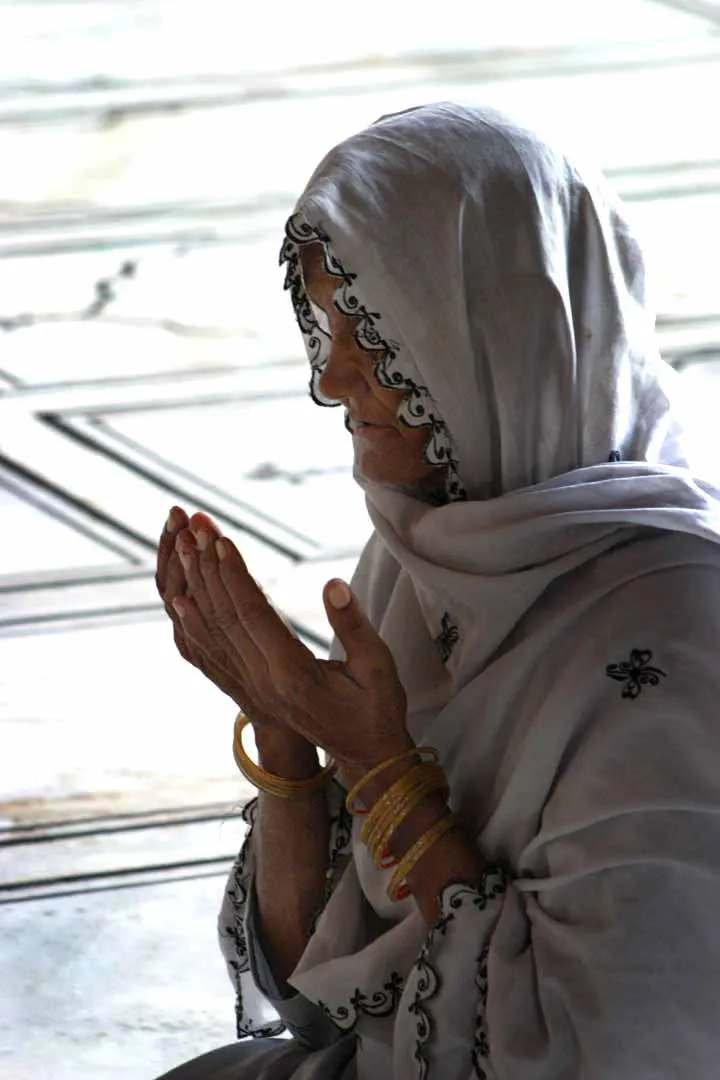
Photo: Steve Evans from Citizen of the World, CC BY 2.0, via Wikimedia Commons
In a busy Chicago emergency room, Dr. Nadia Osman moves between patients with the kind of calm authority that takes years to cultivate. She credits her training, her team, and — perhaps unexpectedly — her wardrobe. "I stopped spending mental energy on what to wear every morning a long time ago," she says. "My jilbaab is my uniform. And because of that, my mind is fully present the moment I walk through those doors."
This is not an isolated observation. Across industries where performance pressure is unrelenting — medicine, law, finance, engineering — American Muslim women are articulating something that researchers have long suspected: clothing is not merely aesthetic. It is cognitive infrastructure.
The Science of What You Wear
The psychological relationship between clothing and performance has attracted serious academic attention over the past decade. Researchers at Northwestern University coined the term "enclothed cognition" to describe the systematic influence that clothing exerts on the wearer's psychological processes. Their studies found that wearing garments associated with competence — a lab coat, for instance — measurably improved sustained attention and task performance.
Decision fatigue is a related phenomenon. The average person makes thousands of micro-decisions each day, and the mental energy consumed by early-morning choices — including what to wear — chips away at the cognitive reserves available for complex professional tasks later. It is precisely why figures like Barack Obama and Steve Jobs famously simplified their wardrobes: not out of indifference to appearance, but out of respect for the limits of human attention.
For many American Muslim women, the jilbaab functions as an elegant, faith-rooted solution to this same problem. A considered modest wardrobe, built around a few well-chosen jilbaabs, eliminates the daily negotiation of hemlines, necklines, and layering combinations. The morning begins with clarity rather than compromise.
Presence Without Noise
Sarah Al-Rashid is a senior associate at a corporate law firm in Washington, D.C. She describes her jilbaab not as a limitation but as a form of professional branding. "In a room full of people in similar suits, I am immediately distinct," she explains. "And that distinctiveness comes with a certain gravitas. Clients remember me. Colleagues take note. My appearance communicates that I am someone who makes intentional choices — and that matters in a field where judgment is everything."
This point resonates with what organizational psychologists call "appearance-based credibility signals" — the ways in which deliberate, consistent dressing communicates reliability and self-possession to observers. A professional who presents herself with coherence day after day signals that she is organized, grounded, and in control. The jilbaab, worn with intention, delivers exactly that message.
For Muslim women navigating predominantly non-Muslim professional spaces, this dynamic carries additional weight. Modest dress does not simply reflect identity — it actively shapes how that identity is perceived and received. Rather than assimilating into a dress code that may feel misaligned with their values, these women are authoring their own professional aesthetic, on their own terms.
Eliminating the Compromise Tax
Among the subtler stressors that non-Muslim colleagues may never encounter is what some Muslim professionals privately call the "compromise tax" — the ongoing mental and emotional labor of determining how to dress in ways that honor both faith and workplace norms. For women who wore more conventional professional attire before embracing modest fashion, the shift to a consistent jilbaab wardrobe often marks a turning point.
Leila Hassan, a software engineer at a mid-sized tech company in Austin, Texas, describes the transition vividly. "Before, I was always calculating. Is this top modest enough? Do I need another layer? Will this be appropriate for the client meeting? It was exhausting in a way I didn't fully recognize until it stopped." After building a core wardrobe of breathable, structured jilbaabs suited to her office environment, she found that her mornings became quieter — and her workdays, sharper. "I walk in feeling settled. That matters more than people realize."
The elimination of this particular form of cognitive overhead is not trivial. For women working in environments where they are already navigating implicit bias, imposter syndrome, or the pressures of being "firsts" in their fields, any reduction in ambient stress has compounding benefits.
Building a Wardrobe That Works as Hard as You Do
The practical dimension of this conversation matters. Not every jilbaab is suited to every professional context, and the women interviewed for this article were candid about the importance of thoughtful selection.
For clinical environments, fabric performance is paramount — breathable, easy-care materials that hold their shape through long shifts. For courtrooms and boardrooms, structure and color carry weight; deep navies, charcoals, and muted earth tones tend to read as authoritative without demanding attention. For tech offices and creative industries, there is more room for texture and quiet detail — a subtle embroidered hem, a refined silhouette — that allows personal expression within the framework of modesty.
The common thread, across all of these contexts, is intentionality. A jilbaab chosen with care for fit, fabric, and occasion does not merely cover — it communicates. It tells the room something about the woman wearing it before she has spoken a word.
The Confidence That Comes from Coherence
Dr. Osman, returning to the conversation after a shift, offers a final thought that captures something essential. "People talk about confidence like it's a feeling you either have or you don't. But a lot of confidence is structural. It comes from knowing who you are and letting that show consistently." She pauses. "My jilbaab is part of that structure. It's not separate from my professional identity. It is my professional identity."
This is perhaps the most important reframing that emerges from these conversations. The jilbaab is not a concession made despite professional ambition — it is a deliberate instrument of it. In a culture that has long associated visible faith with limitation, American Muslim women in demanding careers are demonstrating something quietly radical: that dressing with conviction, rooted in values, is one of the most effective professional strategies available.
The wardrobe, it turns out, is not incidental to the work. For these women, it is where the work begins.