Faith, Fitness, and Fabric: How American Muslim Women Are Demanding More From Their Modest Activewear
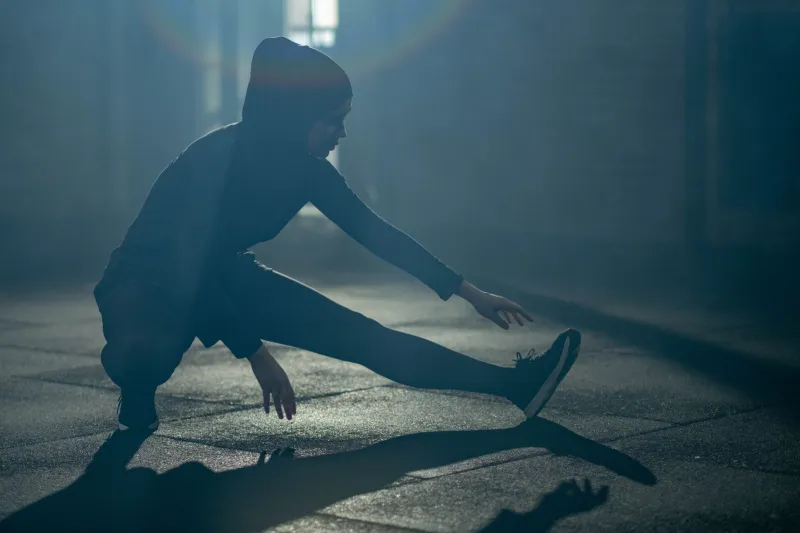
For years, the American fitness industry operated on a fairly narrow set of assumptions about who its customers were and what they needed. The standard athletic wardrobe — form-fitting leggings, cropped tops, sleeveless tanks — was designed with a particular body presentation in mind, leaving little room for women whose relationship with clothing is shaped by faith, culture, or personal conviction. For Muslim women who observe modest dress, the gym floor, the hiking trail, and the yoga studio often felt like spaces that had not been designed with them in consideration.
That reality is changing, and it is changing because Muslim women are demanding that it does.
The Problem With Adapting What Already Exists
For a long time, the workaround was improvisation. Women layered long-sleeve compression shirts beneath standard athletic tops. They paired loose track pants with modest tunics that were never quite intended for high-intensity movement. They wore full jilbaabs on morning walks and hoped the fabric would cooperate with the weather. These solutions were functional in the loosest sense, but they were also compromises — and many women grew tired of compromising.
Nadia Hassan, a Chicago-based personal trainer who works primarily with Muslim women clients, describes the frustration clearly. "The issue was never motivation or commitment," she explains. "The issue was that the clothing available made you feel like an afterthought. You were constantly adjusting, constantly aware of what was slipping or riding up. That kind of distraction takes a real toll on your ability to focus on the workout itself."
Her observation points to something the industry is only beginning to quantify: that clothing which does not fit a woman's actual needs does not simply inconvenience her — it actively discourages participation. For Muslim women navigating American fitness spaces, the stakes of ill-fitting modest activewear extend beyond comfort. They touch on visibility, belonging, and the very question of whether these spaces are genuinely welcoming.
What Performance-Ready Modest Wear Actually Requires
Designing activewear for modest dress is not simply a matter of adding fabric to existing silhouettes. The engineering demands are genuinely distinct. A jilbaab or modest athletic set intended for physical activity must manage moisture effectively across a greater surface area than conventional athletic wear. It must maintain its silhouette under movement without clinging in ways that compromise modesty. It must allow a full range of motion — the kind required for a sun salutation, a trail run, or a weightlifting session — without pulling, bunching, or shifting.
The head covering presents its own technical challenges. A hijab worn during vigorous exercise must stay secure without causing overheating, and it must be constructed from materials that wick perspiration away from the scalp and face. Several emerging brands have approached this problem through bonded seam construction, flat-lock stitching, and the integration of cooling mesh panels into designs that still read as fully modest.
Fatima Al-Rashid, a competitive marathon runner based in Houston, has tested more products in this category than she can easily count. "The brands that get it right understand that modest doesn't mean stationary," she says. "I need coverage that moves with me for twenty-six miles. That requires real textile engineering, not just a longer hemline."
Brands Rising to the Challenge
A growing number of companies — many of them founded by Muslim women — are approaching this design challenge with genuine seriousness. Rather than retrofitting conventional athletic wear, they are building modest performance collections from the ground up, conducting wear tests with actual athletes and incorporating their feedback into iterative design processes.
Some of the most compelling innovations in this space involve fabrication choices that would be familiar to any serious athlete: four-way stretch jersey blends, antimicrobial treatments, UV-protective weaves, and seamless knit constructions that eliminate chafing across longer distances. What distinguishes these products is the deliberate application of those technologies to silhouettes that honor the principles of modest dress — loose through the body, fully covering the arms and legs, and designed to be worn with a head covering without creating awkward proportions.
The outdoor recreation sector has also begun to take notice. As Muslim women increasingly claim space on hiking trails, in rock-climbing gyms, and on cycling paths, the demand for modest activewear that performs in varied conditions — wind, rain, heat, cold — has expanded beyond the gym floor. Waterproof modest outer layers, breathable trail-ready abayas, and packable modest athletic sets designed for travel are all emerging as genuine market categories.
The Wellness Dimension
The conversation around modest activewear is not limited to competitive athletics. A significant and growing segment of the American Muslim women's community is engaged with wellness practices that blend physical movement with spiritual intention — yoga, meditation, walking circles, and community fitness classes that often take place in mosque or Islamic center settings.
For these women, the design requirements of modest activewear carry an additional dimension. The clothing must be appropriate not only for physical exertion but for the spiritual atmosphere of the space in which it will be worn. Muted color palettes, refined silhouettes, and fabrics that move quietly and gracefully are often as important as technical performance specifications.
Sarah Okonkwo, a certified yoga instructor in Atlanta who leads weekly classes for Muslim women, describes what her students are looking for. "They want to feel put-together, not just covered. There's a real aesthetic dimension to this — they're not willing to sacrifice elegance for functionality, and they shouldn't have to."
Her point speaks to a broader truth about the modest activewear movement: it is not a request for accommodation. It is a demand for excellence.
The Larger Cultural Shift
What makes this moment significant is not simply the emergence of new products. It is the cultural shift that those products represent. American Muslim women who participate actively in fitness culture are, by their very presence in these spaces, expanding the definition of what an athlete looks like in the United States. They are running road races in hijabs, practicing Pilates in modest athletic sets, and posting their workouts on social media with the same confidence and specificity as any other fitness community.
This visibility matters. It creates demand, which creates market opportunity, which creates better products, which makes participation more accessible for the next generation of Muslim women who want to stay active without compromising their values.
The jilbaab has always been, at its core, an expression of identity — a statement about who a woman is and what she believes. That it is now being engineered to support a four-mile tempo run or a ninety-minute hot yoga class is not a departure from that identity. It is an extension of it: a declaration that faith and physical vitality are not in competition, and that the clothing worn in service of both can be as thoughtfully designed as any other garment in a woman's wardrobe.
For American Muslim women, the message is increasingly clear. You do not have to choose between your convictions and your ambitions. The fabric is finally catching up.