Mirror, Scarf, and Trust: Finding a Beauty Appointment That Respects Your Modesty
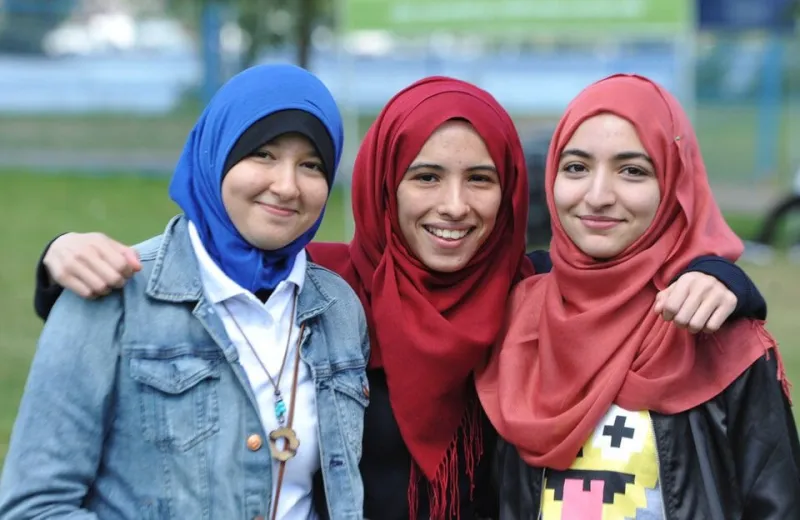
Photo: Sophie Barat, CC BY 2.0, via Wikimedia Commons
A salon appointment is supposed to be a pause. For many American Muslim women, it is also a negotiation. The stylist needs access to hair, skin, or shoulders. The client needs coverage, privacy, and a atmosphere of respect. Those needs do not have to conflict, but they do require planning. The most successful appointments begin long before the cape is fastened.
The Appointment Is Also a Negotiation
Beauty services are intimate by design. A haircut involves close proximity and physical touch. A facial requires a bare face and often a exposed neckline. Bridal preparation can last for hours and involve several staff members. For a woman who wears a hijab, each of these services raises a practical question: who will see what, and under what conditions?
Some women are comfortable removing their scarves in a private room with a female stylist. Others prefer to keep their hair covered entirely and have services performed around the scarf. Neither approach is wrong. The important thing is to choose a salon that can accommodate the preferred approach without debate.
Vetting a Salon Before You Book
Begin with the website and the booking system. Look for mentions of private rooms, quiet hours, or women-only services. A salon that advertises private styling suites is often more prepared for modesty requests. Read recent reviews with attention to language about privacy and staff conduct. If the salon posts frequent photos of clients in various states of undress, that may be a signal about its default culture.
Call or email before booking. Ask whether the salon has a private room for clients who wear hijab. Ask whether the service can be performed by a female stylist. Ask where hair washing takes place and whether a screen or private basin is available. For facials, ask whether the treatment room is separate from the main floor. For bridal services, ask whether the salon can reserve a private area for the full appointment.
Scripts for the Phone and the Booking Form
A short, direct script works better than a long explanation. When calling, try: 'I wear a headscarf for religious reasons. I am booking a haircut and would like a private room with a female stylist. Is that something you can accommodate?' For a facial: 'I need to keep my hair and neck covered as much as possible. Can we adjust the treatment and use a private room?' For a bridal appointment: 'I will be getting ready with family, and we need a private space where we can remove scarves comfortably. Can you reserve a room for us?'
If the person on the phone sounds confused, ask to speak with the manager. If the manager is dismissive, call another salon. A good salon may not have every accommodation in place, but it should be willing to listen and offer alternatives.
Haircuts, Facials, and Bridal Prep
During a haircut, ask for a cape that fastens at the neck and a towel or neck strip for extra coverage. If you prefer to keep your scarf on, ask the stylist to work around it. Many stylists are comfortable cutting a fringe or trimming ends while the client remains covered. For a blow-dry or styling appointment, ask whether the backwash area can be screened or whether a portable basin is available.
For facials, request a treatment room rather than an open spa floor. Ask for a headband or towel that covers the hairline, and request that the neck and chest remain draped. Some treatments require steam or massage near the neck; ask the esthetician to explain each step before beginning. If a product or technique makes you uncomfortable, say so. A professional esthetician will adjust.
Bridal preparation requires the most planning. Ask whether the salon can reserve a private suite for the bride and her party. Confirm how many staff members will be present and whether the room can be locked or screened. Bring a large scarf or robe for moving between the styling chair and the dressing area. If the salon cannot offer privacy, consider hiring a stylist to come to the home or venue.
Red Flags and Green Lights
Red flags include visible irritation at the request, pressure to remove a scarf in a public area, a refusal to provide a female stylist when one is available, and a lack of privacy in washing or treatment areas. Green lights include a calm 'we can do that,' a willingness to explain the layout, a private room with a door, and staff who ask before touching or uncovering.
It also helps to note how the salon handles other forms of privacy. Do they ask before posting client photos? Do they offer robes rather than thin wraps? Do they respect a request to keep the door closed? A salon that treats privacy as normal is more likely to treat modesty as normal too.
Three Success Stories From Across the Country
In Minneapolis, a salon added a small private room after several Muslim clients asked for one. The room now serves clients who wear hijab, clients with sensory needs, and bridal parties. In Atlanta, a day spa introduced quiet morning appointments with a female-only staff and a private facial suite. In Chicago, a bridal stylist began offering at-home preparation for Muslim brides, complete with a portable steamer and a screen. None of these changes were dramatic. Each began with a client who asked a clear question and a business that chose to listen.
A Short Checklist
Before booking, confirm the gender of the stylist, the privacy of the service area, and the availability of a private room. Ask where washing and treatment will take place. Bring a large scarf or robe for transitions. Arrive with a clear sentence about what you need. If the salon cannot meet the request, leave. There are other salons, and there is no shortage of stylists who understand that self-care and modesty can share the same appointment.