The Seamstress Sessions: Seven Alterations That Turn a Ready-Made Jilbaab Into a Made-for-You Piece
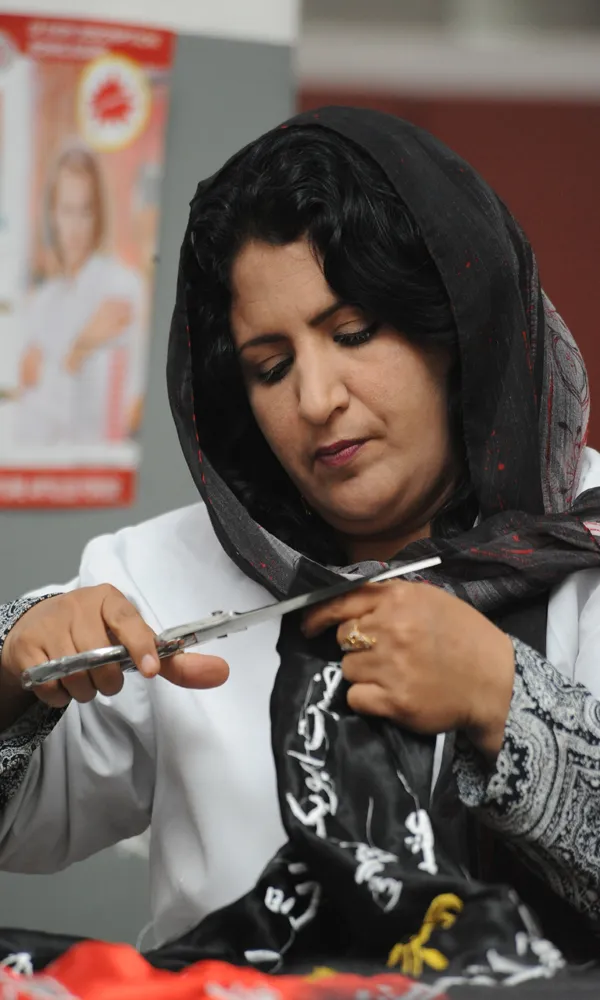
Photo: NATO Training Mission-Afghanistan, Public domain, via Wikimedia Commons
Walk into any tailor shop serving a Muslim community — in Dearborn, in Brooklyn, in suburban Dallas — and you will find a fitting form draped in black jersey and a seamstress with strong opinions about hemlines. Ready-to-wear jilbaabs have improved dramatically over the past decade, but mass sizing still fails a huge share of women: too long for a five-foot-two frame, too tight through the shoulders, sleeves that swallow the hands.
The solution is not another online order. It is a relationship with a good tailor. We spoke with modest-wear specialists about the alterations that deliver the most transformation per dollar — and the ones to skip.
1. The Hem: The Highest-Return Fix
Nearly every tailor we spoke with named length first. Jilbaabs are typically cut for a tall model, and a hem that drags collects street grime, frays at the edge, and — more seriously — poses a tripping hazard.
Cost: $15–$30 for a simple rolled or blind hem; $35+ for pleated or embroidered edges.
Fabric note: Jersey and nida hem beautifully. Chiffon requires a rolled hem on a serger, which raises the price. Avoid altering heavily beaded hems — the labor cost can exceed the garment's value.
DIY option: For straight-cut jersey, fabric shears and fabric glue (or hem tape) can produce a respectable finish, though it will not survive repeated washing like a sewn hem.
2. Sleeve Shortening and Tapering
Sleeves that extend past the fingertips interfere with wudu, cooking, and typing alike. Shortening to the wrist bone, or tapering a balloon sleeve into a slimmer line, is a modest change with an outsized effect on how tailored a jilbaab looks.
Cost: $12–$25 per pair.
Fabric note: Crepe and polyester blends hold a taper well. Slippery satins are harder to press flat and may pucker.
3. Taking In the Side Seams
A jilbaab should skim, not tent. Taking in the side seams by an inch or two preserves modesty while restoring shape — the single alteration most often credited with making an inexpensive jilbaab look expensive.
Cost: $20–$40 depending on construction.
Fabric note: Straightforward on most wovens. Skip this on garments with side pockets or contrast panels, where the seam lines are harder to disguise.
4. Adding Elastic or a Drawstring Waist
For one-piece jilbaabs and abayas, converting a rigid waist to a covered elastic or interior drawstring transforms daily comfort, especially during pregnancy, postpartum, or weight fluctuation.
Cost: $20–$35.
DIY option: Confident home sewers can create a casing with bias tape and feed through soft elastic in under an hour.
5. Reinforcing Stress Points
Unsexy, invaluable. Underarm seams and pocket corners on ready-made jilbaabs often fail within months. A tailor can reinforce these seams before they split.
Cost: $10–$15. Some tailors offer this free with other work — ask.
6. Adding a Zipper or Snaps for Nursing Access
New mothers are driving quiet demand for hidden snap plackets and invisible zippers along the front closure of jilbaabs and prayer garments.
Cost: $30–$50 for an invisible zipper; snaps run $15–$25.
Fabric note: Works best on front-open or kimono-style cuts; converting a pull-over style requires significant surgery and is usually not worth it.
7. The Pocket Addition
American women want pockets, and jilbaab wearers are no exception. A discreet side-seam pocket, positioned at hip height and cut to lie flat, is the alteration tailors report being asked for most by customers under thirty.
Cost: $20–$30.
Fabric note: Requires at least two inches of side-seam allowance. Very slim-cut styles cannot accommodate hidden pockets without visible bulging.
Choosing Your Tailor
Not every alteration shop understands modest wear. Look for tailors in or near Muslim commercial districts, read reviews that mention abayas specifically, and bring your jilbaab in person — a good tailor will assess the fabric's grain, the seam finishing, and the wear patterns before quoting you.
One final piece of collective wisdom from the pros: buy the best fabric you can afford and alter the fit, rather than the reverse. A $60 well-made jilbaab with $40 of alterations will outperform a $150 garment cut from fabric that cannot hold a seam. In modest fashion, as in most things, the foundation matters most — and the fit is what turns a purchase into a piece.