Dressed Beyond the Algorithm: How the Jilbaab Offers a Quiet Refuge From Social Media's Beauty Machine
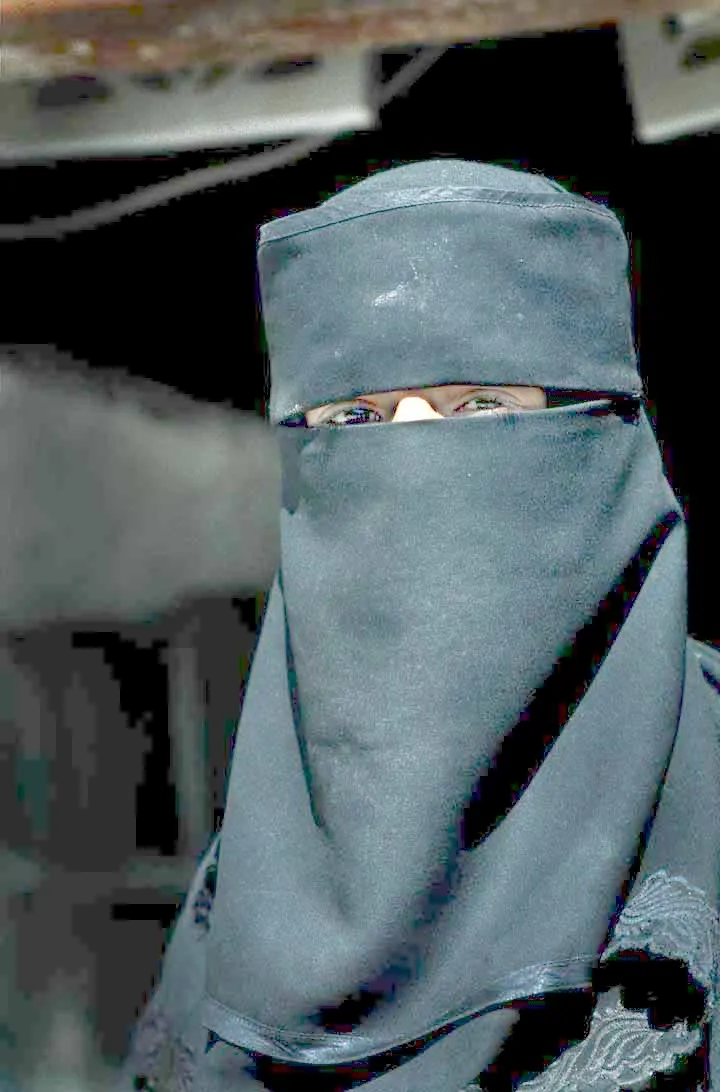
Photo: Muslim_woman_in_Yemen.jpg: Steve Evans, imported by FlickrLickr derivative work: Bertrand GRONDIN (talk), CC BY-SA 3.0, via Wikimedia Commons
There is an entire industry built around helping women feel better about their bodies. Meditation apps. Journaling prompts. Therapy modalities dedicated to healing the relationship between women and their own reflections. Billions of dollars spent trying to undo what billions of other dollars spent on advertising have done—convincing women that their bodies, as they are, are insufficient.
And then there is the jilbaab.
Not as a solution to a psychological crisis. Not as a therapeutic intervention. But as a garment that, for many Muslim women in America, quietly accomplishes something that the self-care industry has turned into a cottage economy: it removes the body from the equation entirely.
The Algorithm Has a Business Model, and Your Insecurity Is It
To understand what the jilbaab offers psychologically, it helps to understand what it is offering protection from. Social media platforms—Instagram, TikTok, Pinterest, and their successors—are not neutral spaces. They are engineered environments, built on recommendation systems that have been repeatedly shown to amplify content that provokes emotional response. And few emotional responses are more reliable, from an engagement standpoint, than the particular discomfort of body comparison.
Research has documented this pattern extensively. Exposure to idealized body imagery on social media is associated with increased body dissatisfaction, disordered eating behaviors, and diminished self-esteem—particularly among women. The algorithms know this, in the way that algorithms know anything: through the data of what keeps users scrolling. An anxious user is an engaged user. An engaged user is a monetizable user.
The beauty industry, the diet industry, and the fitness industry all benefit from this arrangement. The woman who feels inadequate after twenty minutes on Instagram is a woman who may purchase a supplement, a program, or a filter. The insecurity is not incidental to the business model. It is central to it.
Choosing to Opt Out
For Muslim women who wear the jilbaab, the relationship between clothing and body is fundamentally different from the one that consumer culture attempts to impose. The jilbaab is not designed to display the body, to flatter particular features, or to signal physical desirability. It is designed to cover—completely, consistently, and with a dignity that does not fluctuate based on the season's trending silhouette.
This is a meaningful departure from the logic of mainstream fashion, which is structured around the body as a primary site of display and evaluation. When the body is not on display, it cannot be compared in the same way. When it cannot be compared in the same way, the algorithm loses a significant portion of its leverage.
This is not to suggest that Muslim women are immune to insecurity, or that wearing a jilbaab automatically resolves complex feelings about one's appearance. That would be both simplistic and untrue. But many Muslim women in America describe a genuine shift in their relationship to their bodies after adopting modest dress—a quieting of the constant self-surveillance that consumer culture encourages.
Rejecting Commodified Femininity
There is a deeper dimension to what the jilbaab represents in the context of contemporary American culture, and it goes beyond personal psychology. The choice to wear modest dress is, among other things, a refusal of the dominant framework through which women's bodies are understood and valued in this country.
American consumer culture has a very specific vision of femininity—one that is visible, available, and perpetually in need of improvement. This vision is not neutral. It is profitable. And it is sustained by an enormous infrastructure of media, advertising, and social platforms that work in concert to ensure that women remain invested in the project of their own physical optimization.
The jilbaab, by its nature, declines to participate in this project. It signals that the woman wearing it has organized her self-presentation around a different set of values—ones that are not legible to the algorithm and not responsive to the beauty industry's metrics. This is, in the current cultural moment, a genuinely countercultural act.
The Freedom of Being Unseen
There is a phrase that some Muslim women use to describe the experience of wearing a jilbaab in public spaces: the freedom of being unseen. It sounds paradoxical in a culture that equates visibility with value. But the experience it describes is real and worth examining.
When a woman's body is not the first thing that is evaluated in a public encounter, the nature of that encounter changes. She is met, first, as a person—as a professional, a colleague, a customer, a neighbor. The social dynamics that typically organize around physical appearance are disrupted, if not entirely eliminated. For many Muslim women, this disruption is experienced not as a loss but as a relief.
In a social media landscape where the pressure to present a visually optimized self is relentless, the jilbaab offers a different relationship to visibility. It does not ask the woman wearing it to compete on the terms that the algorithm has established. It establishes different terms entirely.
Style Without Submission
It would be a mistake to read this as a rejection of aesthetics or personal expression. Muslim women who wear the jilbaab engage deeply with questions of style, color, fabric, and design. The modest fashion community in America is vibrant, creative, and invested in the pleasures of dressing well. The jilbaab is not a renunciation of beauty—it is a redefinition of where beauty lives and who it is for.
The difference is that the aesthetic choices made within modest fashion are not organized around the male gaze, the beauty algorithm, or the diet industry's definition of an acceptable body. They are organized around personal expression, cultural identity, religious meaning, and the simple pleasure of a well-made garment. That is a distinction with real psychological weight.
In a cultural moment defined by algorithmic anxiety and commodified self-image, the jilbaab offers something increasingly rare: a framework for dressing that does not require a woman to evaluate herself through someone else's metrics. That, for many Muslim women in America, is not a constraint. It is a form of freedom.