The Second Life of the Jilbaab: How Smart Resale Culture Is Making Modest Fashion More Accessible and More Sustainable
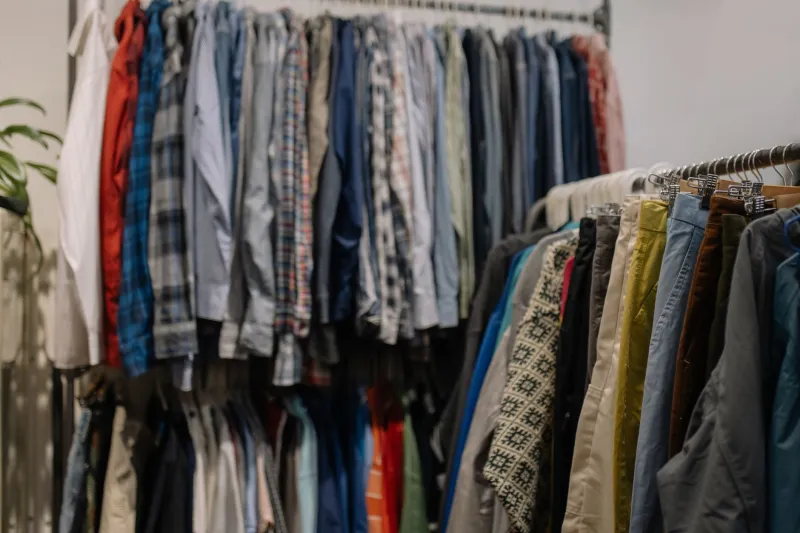
The jilbaab hanging in Layla's Chicago apartment was not purchased new. It arrived in a carefully packed shipping envelope from a seller in Michigan, wrapped in tissue paper, accompanied by a handwritten note describing the occasions on which it had been worn. The garment—a structured, full-length abaya-style jilbaab in deep olive silk crepe from a well-regarded modest fashion label—retailed originally for over three hundred dollars. Layla paid ninety-five.
"It arrived in perfect condition," she says. "Better than some things I've bought new, honestly. And there was something about knowing its history that made it feel more valuable, not less."
Layla's experience is increasingly common among American Muslim women who have discovered that the secondary market for quality modest fashion is not only real but thriving. Across resale platforms, private Facebook groups, consignment shops, and peer-to-peer networks within Muslim communities throughout the United States, a quiet revolution in how jilbaabs are bought, sold, and valued is well underway.
Why Modest Fashion Lends Itself to Resale
The economics of modest fashion resale are, in some respects, more favorable than those of mainstream fashion. Several factors converge to make quality jilbaabs particularly well-suited to the secondary market.
First, construction quality in premium modest wear tends to be higher than in comparable mainstream garments. Full-length silhouettes require more fabric, more careful seaming, and greater structural integrity to drape properly. A well-made jilbaab from a reputable maker is built to last—and that durability translates directly into resale value.
Second, the modest fashion aesthetic is less subject to rapid trend obsolescence than mainstream fashion. A beautifully cut jilbaab in a classic neutral or a timeless jewel tone does not become dated in the way that a fashion-forward statement piece might. This means that garments purchased five years ago can still be resold today with minimal depreciation in perceived style value.
Third, the American Muslim community maintains strong internal networks—both digital and physical—that facilitate the circulation of goods among trusted peers. Within these communities, the provenance of a garment matters. Knowing that a jilbaab was worn by a fellow Muslim woman who cared for it properly carries a kind of social credibility that anonymous thrift store finds do not.
The Platforms Driving the Movement
The infrastructure of modest fashion resale in the United States has developed across several distinct channels, each with its own character and community.
General resale platforms such as Poshmark, Depop, and ThredUp have become increasingly viable venues for modest fashion, as their user bases have grown diverse enough to include sellers and buyers specifically seeking jilbaabs, abayas, and related modest garments. Savvy sellers have learned to use precise search terminology—fabric type, occasion, brand name, and sizing details—to connect with buyers who know exactly what they are looking for.
Private Facebook groups dedicated to modest fashion resale have proliferated particularly rapidly within American Muslim communities. These groups, which often number in the tens of thousands of members, function as highly curated marketplaces where trust is established through community membership and peer accountability. Transactions are often accompanied by detailed condition reports, multiple photographs, and transparent pricing histories.
Instagram has emerged as a parallel venue, where individual sellers—sometimes described as "modest fashion collectors"—maintain dedicated accounts showcasing their inventory. These accounts function somewhere between a personal boutique and a curatorial practice, often featuring editorial-style photography that presents secondhand pieces with the same care as a retail lookbook.
What Makes a Jilbaab Worth Collecting
Within the resale community, certain qualities consistently determine whether a modest garment holds its value over time. Understanding these factors is useful both for buyers seeking strong secondary-market finds and for women considering which pieces to invest in at retail.
Fabric quality is the primary determinant. Silk crepe, high-grade wool, and structured ponte fabrics age significantly better than cheaper synthetic alternatives. They resist pilling, hold their shape, and respond well to careful laundering. A jilbaab in quality natural or semi-natural fabric that has been properly maintained can look nearly new after years of thoughtful wear.
Construction details matter considerably as well. French seams, covered hems, quality zippers or closures, and careful lining all signal a garment built for longevity. Experienced resale buyers have learned to examine these details in listing photographs and to ask specific questions of sellers before committing to a purchase.
Brand recognition plays a growing role in the modest fashion secondary market. As American Muslim women have developed stronger awareness of which labels consistently deliver quality, certain brand names have begun to carry meaningful resale premiums. A jilbaab from a well-regarded modest fashion house will consistently command a higher resale price than a comparable anonymous piece—a dynamic familiar from mainstream luxury resale but relatively new to modest fashion.
Sustainability as a Shared Value
Beyond the financial logic of resale, many American Muslim women engaged in the secondary modest fashion market describe a deeper motivation: alignment between their purchasing choices and their values.
Islamic tradition has long emphasized the principles of avoiding waste and practicing responsible stewardship of resources—values that map naturally onto the sustainability arguments for resale and extended garment life. For many Muslim women, participating in the secondhand market is not merely a pragmatic financial decision but an expression of those deeper commitments.
"Fast fashion is designed to be disposable," observes Hana, a Detroit-based modest fashion reseller who has built a following of several thousand on Instagram. "That's fundamentally at odds with how I think about consumption. When I sell a jilbaab that I've loved and cared for to someone who will love and care for it in turn, that feels right. It feels like the garment is being honored rather than discarded."
This perspective is increasingly shared across the American Muslim community and is contributing to a broader cultural shift in how modest fashion is valued—not as a disposable commodity but as a material investment worthy of care, circulation, and extended life.
Practical Guidance for Entering the Resale Market
For women new to buying or selling modest fashion secondhand, a few principles can smooth the process considerably.
When buying, prioritize sellers who provide detailed condition descriptions and multiple photographs from different angles. Ask about washing history, fabric care, and whether any alterations have been made. Request measurements rather than relying solely on size labels, which vary significantly between makers.
When selling, invest time in presentation. Clean, well-lit photographs against a neutral background, accompanied by honest and specific condition notes, will consistently outperform hasty listings. Price with reference to current retail values and the garment's condition, rather than simply at a percentage of original cost.
Perhaps most importantly: approach the modest fashion resale market as a community rather than a transaction. The women buying and selling within these networks share values, aesthetics, and often a genuine love of beautiful, well-made garments. That shared foundation makes the experience of participating in the secondary market something more than commerce—it makes it connection.