Covered and Credible: A Muslim Woman's Practical Guide to Modest Dress in the American Workplace
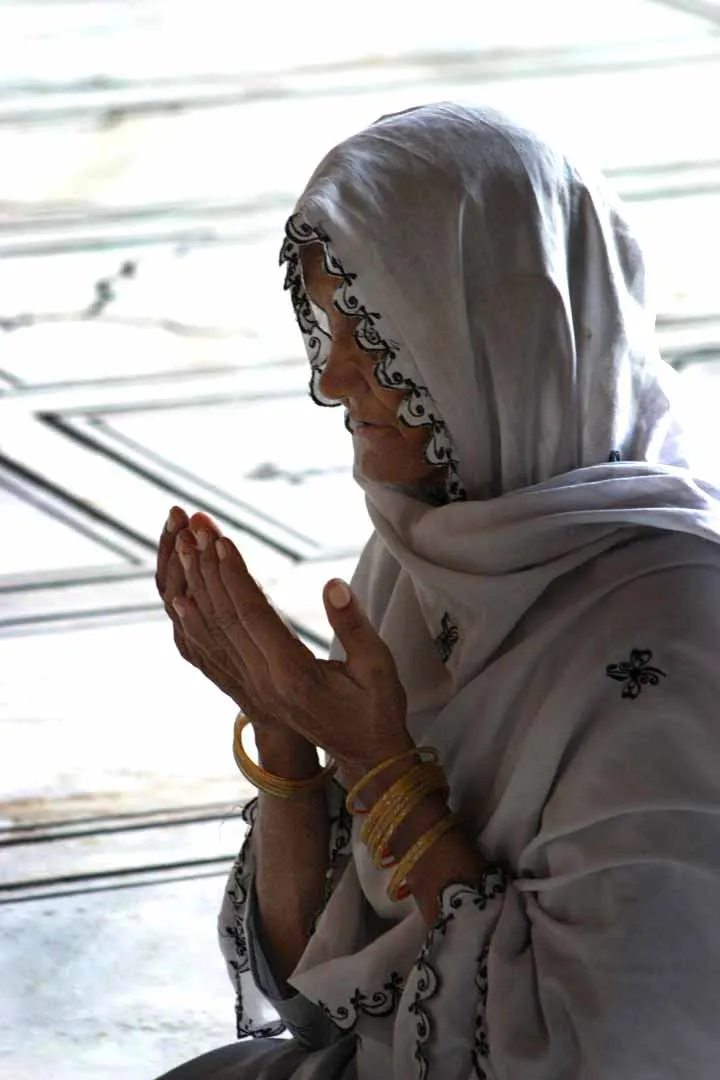
Photo: Steve Evans from Citizen of the World, CC BY 2.0, via Wikimedia Commons
The American workplace has never been a neutral space. It carries assumptions about what professionalism looks like, how authority is communicated, and which bodies are legible as competent and credible. For Muslim women who wear the jilbaab, entering that space means negotiating those assumptions every day—often before saying a single word.
This is not a theoretical challenge. It is a practical one, and it deserves a practical response.
This guide is written for Muslim women navigating professional environments where modest dress is not explicitly welcomed—where the dress code was written without them in mind, where HR departments are uncertain how to respond to religious accommodation requests, and where the subtle friction of being visibly different can accumulate into something heavier than any individual incident. It is also written for those who are simply looking to dress with both intention and authority in workplaces that are, slowly and unevenly, becoming more inclusive.
Know Your Legal Standing Before You Need It
The foundation of any effective workplace strategy begins with understanding your rights. Under Title VII of the Civil Rights Act of 1964, employers in the United States are legally required to provide reasonable accommodations for employees' sincerely held religious beliefs—unless doing so would create an undue hardship for the business. Wearing a jilbaab or other modest dress as an expression of religious practice falls squarely within this protection.
This means that an employer who refuses to allow a Muslim woman to wear modest dress at work—absent a genuine and demonstrable operational hardship—is likely in violation of federal law. The Equal Employment Opportunity Commission (EEOC) handles religious discrimination complaints and provides resources for employees navigating these situations.
Knowing this before a conflict arises changes the dynamic of any conversation you may need to have with HR or management. You are not asking for a favor. You are exercising a federally protected right. That distinction matters—both legally and psychologically.
How to Make a Formal Accommodation Request
If your workplace has a dress code that does not explicitly account for religious modest dress, a proactive accommodation request is often the most effective approach. Rather than waiting for a conflict to arise, consider initiating the conversation early—ideally before your first day or during the onboarding process.
A formal accommodation request does not need to be confrontational. It can be framed simply and professionally: you are informing your employer of your religious practice, explaining that it includes wearing modest dress including a jilbaab, and requesting confirmation that this is accommodated under the company's policies. Putting the request in writing—via email to HR—creates a record that protects you if issues arise later.
If you encounter resistance, ask the employer to explain in writing what specific operational hardship the accommodation would create. This question often clarifies matters quickly. Vague discomfort with the appearance of modest dress does not constitute an undue hardship under the law.
Dressing for Authority in a Jilbaab
Legal protections are essential, but they are only part of the equation. The other part is the daily, practical work of presenting yourself with the kind of visual authority that professional environments respond to—on your own terms.
The good news is that the jilbaab, when chosen with care, is an extraordinarily effective professional garment. Its clean lines, complete coverage, and inherent formality communicate composure and intentionality. The challenge is finding pieces that translate these qualities into the specific visual language of your workplace.
For corporate and office environments, structured fabrics—crepe, ponte, and high-quality polyester blends—tend to photograph well in video calls, hold their shape through long days, and resist the wrinkling that undermines a polished appearance. Solid colors and subtle patterns in professional tones (navy, charcoal, forest green, burgundy) read as authoritative without sacrificing personal expression. A jilbaab that fits well—neither too loose to appear intentional nor restrictive in movement—signals that the wearer has made deliberate choices about her presentation.
Pay attention to length and sleeve construction. A jilbaab that requires constant adjustment during meetings is a distraction you do not need. Look for designs with secure closures, appropriately weighted hems, and sleeves that allow for comfortable keyboard use and note-taking without riding up.
Navigating Microaggressions With Precision
Not every form of workplace friction rises to the level of formal discrimination. Microaggressions—the casual comments, the surprised expressions, the questions that would never be asked of a non-Muslim colleague—are a common feature of the professional experience of visibly Muslim women, and they require a different kind of response.
Developing a repertoire of calm, confident responses to common microaggressions is genuinely useful. When a colleague expresses surprise that you are wearing a jilbaab in a particular setting, a simple and pleasant acknowledgment—without defensiveness or over-explanation—redirects the conversation efficiently. You are not obligated to educate every person who expresses curiosity about your religious practice, and you are equally not obligated to perform discomfort to make others comfortable with their own assumptions.
The goal is to remain present and authoritative without being derailed. A colleague's surprise at your presence is their issue to resolve. Your job is to be excellent at your work, and to be seen doing it.
Building Allies and Institutional Visibility
One of the most effective long-term strategies for Muslim women in professional environments is the cultivation of allies—colleagues, managers, and mentors who understand your situation and are willing to advocate alongside you when necessary. This does not mean burdening every professional relationship with the details of your religious accommodation history. It means building genuine professional relationships in which your full self is known and respected.
Seek out employee resource groups (ERGs) focused on religious diversity, if your organization has them. If none exist, consider whether you are in a position to help establish one. Institutional visibility—having Muslim women present and prominent in professional spaces—is one of the most durable forms of change available, and it begins with individual women choosing to be fully present rather than strategically invisible.
The Jilbaab as a Statement of Presence
There is a final point worth making, and it is perhaps the most important one. The jilbaab in a professional setting is not an obstacle to overcome. It is a statement of presence—a visible declaration that Muslim women belong in American workplaces, in positions of authority, and in every professional context this country has to offer.
The labor of navigating imperfect systems and uninformed colleagues is real, and it should not fall entirely on the shoulders of Muslim women to resolve. But in the meantime, each Muslim woman who walks into a boardroom, a classroom, a courtroom, or a hospital corridor wearing her jilbaab with confidence is doing something significant. She is expanding the definition of what American professionalism looks like—and that work matters.