Say Cheese, Stay Covered: Reclaiming the Camera at Eid Dinners and Wedding Season
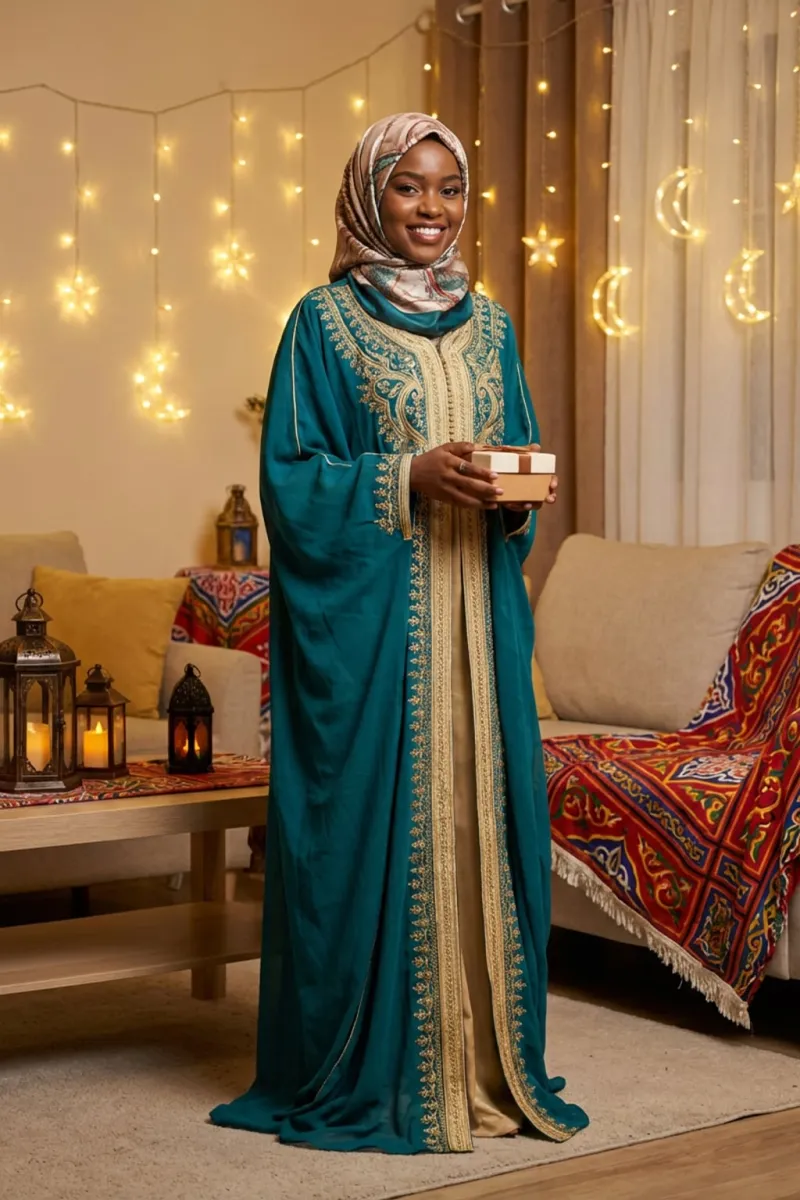
Photo: elegant modest fashion woman hijab Eid celebration portrait, via resizeapi.com
There is a moment familiar to nearly every Muslim woman in America: the Eid brunch table, the couscous still steaming, when someone's phone swings around and suddenly you are expected to look camera-ready. The candid has become the default. The photo dump is the new family album. And for women who dress modestly, this shift carries a particular tension — how do you show up beautifully in an image-saturated world without letting the image start to dress you?
The honest answer is that you can have both. But it requires deciding, before the event, what you are dressing for.
The Photograph Is Not the Point — But It Is Not Irrelevant
Let's be candid about the pressure. Social media has turned every wedding into a content opportunity and every Eid into a gallery. For jilbaab-wearing women, the industry's answer has often been underwhelming: sequined abayas designed for a runway flash, or shapeless occasion wear that flattens personality along with silhouette.
The better path is neither. It is occasion-wear jilbaab styling that understands how cameras actually work — light, texture, and color — and uses that knowledge in service of the woman wearing it, not the audience watching her.
What Photographs Well (and What Doesn't)
Camera sensors love texture and dimension. Flat, shiny satin tends to blow out under indoor lighting, while matte fabrics with subtle surface interest — crinkled crepe, embroidered mesh overlays, pleated chiffon sleeves — read as rich and deliberate in photographs.
Color is the other half of the equation. Deep jewel tones photograph exceptionally well in warm indoor lighting: emerald, burgundy, sapphire, and plum all hold their depth without washing out skin tones. Pale pastels, lovely in person, frequently overexpose against white tablecloths and gold decor. If you love light colors, choose one with a pattern or tonal embroidery to give the camera something to hold onto.
One more technical note: pure black, while elegant, can lose all its detail in low-light venue photography. If black is your signature, add a textured or metallic scarf, a brooch, or tonal embroidery to keep the camera from erasing you into the background.
The Occasion Styling Formula
For weddings and formal Eid gatherings, build around three elements:
A statement jilbaab in a photograph-friendly fabric. Look for pleated sleeves, a subtle A-line flare, or a two-tone overlay. These details create movement, and movement is what separates a memorable photo from a static one.
One deliberate focal point. A wrapped turban-style hijab in a contrasting texture, a single dramatic cuff, or an heirloom piece of jewelry. One focal point reads as confidence; five read as noise.
Shoes you can actually stand in. Wedding halls mean hours on marble floors and the inevitable group photo on the stairs. A low block heel or embellished flat will keep your posture — and your smile — genuine by hour four.
Opting Out Gracefully
Here is the opinion part of this opinion piece: you are allowed to not want the photo. Many women find deep joy in dressing beautifully for Allah and for the room, full stop — no camera required. A simple, warm "I'd rather stay behind the lens today" is a complete sentence, and increasingly, it is one the people around you will respect.
The healthiest relationship with the documented moment is one where the camera is a guest, not a judge. Dress for the occasion, the prayer, the people. If a photo happens to capture it, wonderful. If not, the memory was the point all along.
Own the Frame
When you do choose to be photographed, do it on purpose. Angle toward the light source, let the jilbaab's drape fall naturally rather than tugging it flat, and take the photo before the food arrives when everyone is actually smiling.
Modest fashion in the Instagram era does not have to mean modest fashion by committee. The most striking images of Muslim women — the ones that end up saved and shared — are rarely the most elaborate. They are the ones where the woman looks entirely herself, covered and completely at ease. That ease is the real styling secret, and no filter can replicate it.