The Art of Wearing More With Less: A Strategic Guide to Layering in Modest Fashion
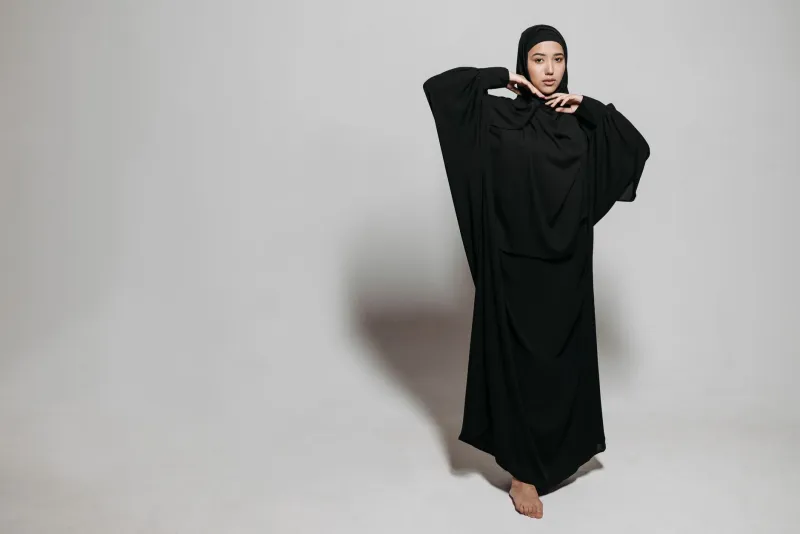
There is a common misconception that modest dressing is inherently simple — that because coverage is the starting point, there is little room left for complexity or creativity. In practice, the opposite is often true. Modest fashion, and jilbaab styling in particular, rewards the woman who understands how to build an outfit in layers: how to add dimension without adding bulk, how to introduce texture without creating chaos, and how to move through the shifting temperatures of an American day without sacrificing either comfort or elegance.
Layering, done well, is not about wearing more. It is about wearing more thoughtfully.
Understanding the Foundation: Why Layering Matters in Modest Wear
For Muslim women in the United States, the practical demands of modest dressing are real and varied. A morning commute in a climate-controlled office building, an afternoon errand run in fluctuating spring weather, and an evening gathering that calls for something more polished — all of these can unfold within a single day. The woman who has mastered layering does not need to change her entire outfit between these transitions. She adjusts, adds, or removes a layer with intention.
Beyond practicality, layering introduces something that flat, single-garment dressing rarely achieves: visual interest. The interplay between a heavier outer piece and a lighter underlayer, or the contrast between a matte fabric and something with a subtle sheen, creates a sense of depth that draws the eye in a refined rather than distracting way. This is the aesthetic power that skilled layering unlocks.
Begin With Proportion: The Architecture of a Layered Look
Before considering color or texture, proportion is the foundational principle of any successful layered outfit. The general rule is straightforward: move from fitted to relaxed as you build outward. A slim-cut inner layer beneath a looser jilbaab or open abaya creates a silhouette that feels intentional rather than shapeless. Conversely, layering volume upon volume — a wide underlayer beneath a wide outer garment — tends to produce a look that reads as unstructured.
Length is equally important. When layering two pieces of similar length, the result can feel static. Instead, consider allowing a longer inner layer to peek below the hem of an outer piece, or choosing a shorter cardigan or jacket that sits at the hip over a floor-length jilbaab. These deliberate length differentials create movement and visual rhythm without requiring anything dramatic.
For American Muslim women who dress professionally, proportion management is especially relevant. A tailored long blazer worn over a fitted underdress, paired with a coordinating hijab, communicates structure and authority while remaining fully modest — a combination that reads effortlessly polished in a corporate or academic setting.
Fabric Weight: The Technical Side of Layering
Not all fabrics layer equally. Choosing the right weight for each component of an outfit is what separates a layered look that feels elegant from one that feels heavy or stiff.
As a general principle, place lighter fabrics closest to the body. Jersey, modal, and fine cotton knits work well as base layers because they move with the body, breathe easily, and do not add unnecessary volume. Over these, medium-weight fabrics — structured crepe, woven linen, or ponte — can serve as the primary garment. The outermost layer, if present, can afford to be heavier: a wool-blend coat, a structured abaya in a denser fabric, or a textured outer robe.
In warmer months, the layering equation shifts. Chiffon over chiffon, or a lightweight cotton jilbaab layered with a gauze-weave open kimono, allows for coverage and dimension without trapping heat. The goal in summer layering is to use fabric weight as a ventilation strategy — choosing pieces that allow air to circulate even when multiple layers are present.
For the transitional months that characterize much of the American calendar — the unpredictable springs of the Midwest, the cool mornings and warm afternoons of the Pacific Northwest — a mid-weight base layer paired with a removable outer piece offers the most flexibility. A long open cardigan or a lightweight structured coat that can be folded into a bag becomes an indispensable part of the modest wardrobe.
Color and Texture: Creating Depth Without Noise
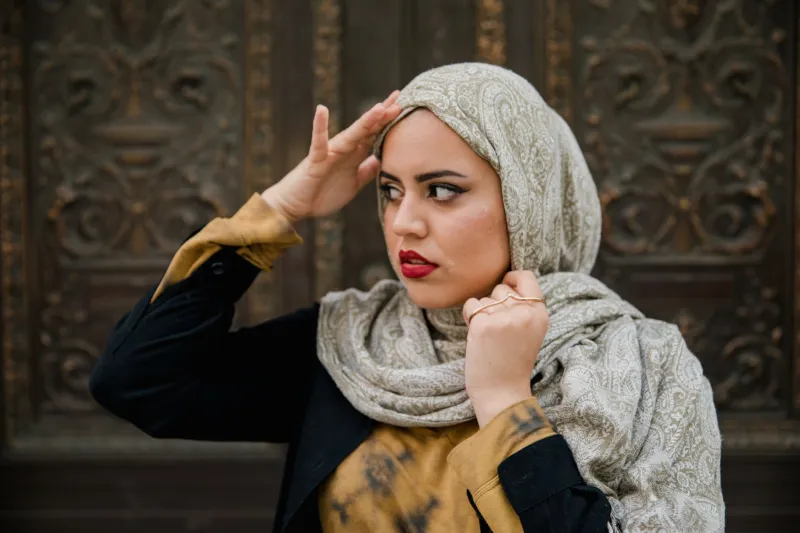
One of the most elegant approaches to color in layered modest dressing is the tonal palette: building an outfit from multiple shades within the same color family. A dusty rose underlayer beneath a deeper mauve jilbaab, finished with a blush-toned hijab, creates a look that is cohesive and sophisticated without relying on contrast. This approach is forgiving, flexible, and particularly effective for women who prefer a quieter aesthetic.
For those who enjoy more contrast, the classic pairing of a neutral outer layer — ivory, stone, charcoal, or camel — with a more saturated inner piece offers a controlled way to introduce color. The neutral anchors the look while the inner color provides visual interest, visible at the neckline or hem depending on the silhouette.
Texture, meanwhile, works much like color in creating dimension. Pairing a smooth crepe jilbaab with a textured underlayer in ribbed knit, or finishing a matte outer garment with a slightly lustrous inner piece, gives the eye something to engage with. The key is restraint: two or three textural elements in a single outfit are sufficient. Introducing more risks crossing the line from intentional into cluttered.
Seasonal Transitions: Adapting the Layered Wardrobe
The American seasonal calendar demands a modest wardrobe that can pivot quickly. A few strategic investments make these transitions seamless.
In fall and winter, the layered jilbaab wardrobe leans on thermal underlayers — fine merino wool or moisture-wicking base layers that add warmth without bulk — paired with heavier outer jilbaabs in wool, structured knit, or brushed fabric. A long wool coat in a neutral shade functions as both a practical outermost layer and a statement piece that elevates any outfit beneath it.
Spring and summer call for a different strategy: lighter fabrics, looser silhouettes, and layers that can be removed easily when temperatures rise. An open-front abaya in a breathable linen worn over a fitted cotton jilbaab offers coverage, style, and adaptability in equal measure.
Year-round, a small collection of versatile transitional pieces — a lightweight duster, a mid-weight open robe, a structured long blazer — serves as the connective tissue of the layered wardrobe, moving between seasons with minimal adjustment.
The Principle of Restraint
Perhaps the most important lesson in modest fashion layering is knowing when to stop. The goal is never to wear as many layers as possible, but to wear exactly the layers that serve the look. Each piece should have a reason for being present — whether functional, aesthetic, or both. When a layer adds nothing to the overall composition, it is better left in the closet.
This principle of restraint is, in many ways, the defining characteristic of jilbaab styling at its best: intentional, considered, and quietly confident. A well-layered modest outfit does not announce itself. It simply works — for the weather, for the occasion, and for the woman wearing it.